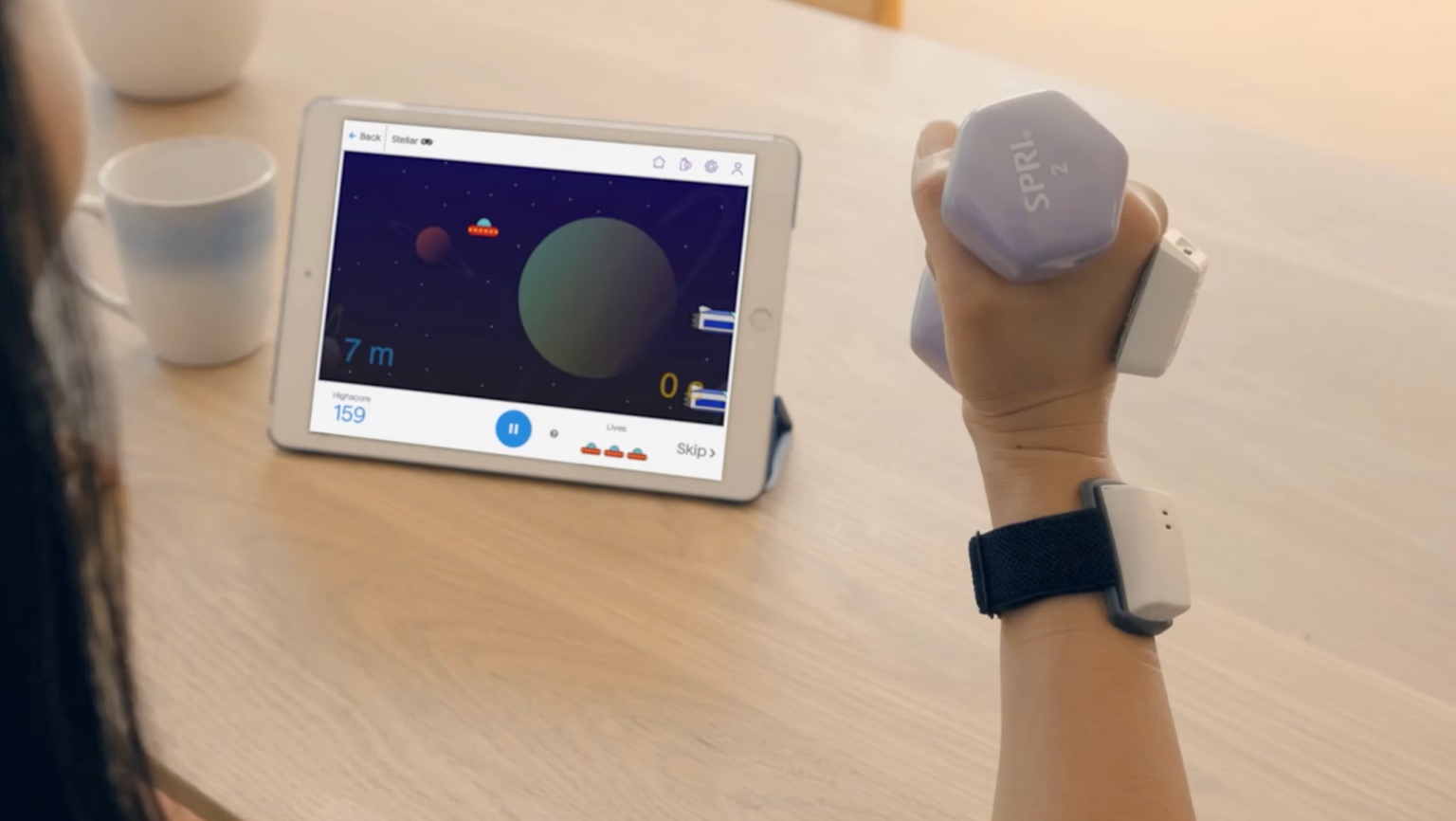
Tenzr Is Showing That Patients Will Actually Complete Their Rehab.
In reported clinical deployments, 75% of Tenzr patients completed their full course of treatment, compared with an industry average of approximately 35%.
Across multiple hospital pilots and live deployments, the company also reported:
- 95% patient adherence
- 80% faster return to function compared with traditional therapy
- 3X more patient data captured for healthcare providers
These results address one of the biggest problems in physical rehabilitation: getting patients to consistently follow their treatment plans.
A Recurring Revenue Model Built Around Clinicians and Patients
Tenzr generates revenue from both clinician access to its software and ongoing patient use.
Clinics receive tools to manage treatment and monitor recovery, while patients use the platform throughout their prescribed rehabilitation.
This creates recurring revenue tied to the number of clinicians using Tenzr and the number of patients receiving treatment.
As clinics bring more patients onto the platform, Tenzr can grow without requiring a proportional increase in clinical staff.
The Opportunity Extends Far Beyond Hand and Wrist Rehabilitation.
Tenzr's initial focus is upper-extremity rehabilitation, including wrist, hand, and shoulder injuries.
But these represent only a fraction of the broader musculoskeletal market.
More than 90 million musculoskeletal injuries occur annually in the United States, while the global physical medicine and rehabilitation industry represents an estimated $270B market, according to the company's investment materials.
Tenzr's underlying technology — motion tracking, personalized exercises, remote monitoring, and gamified rehabilitation — has potential applications across a much wider range of injuries and recovery programs.
As the company expands beyond its initial clinical focus, the same platform could serve additional rehabilitation categories without having to build an entirely new product for each one.